Quick-service restaurants and fuel-plus gas stations run on speed, consistency, and trust. Customers expect their order to be right the first time, every time. But two recent industry studies reveal something deeply uncomfortable: the technology in fast-paced environments that depends on delivering that experience is failing more often than leadership realizes, and the gap between what executives believe and what store-level teams actually experience is quietly costing real margin.
Canopy’s 2026 Restaurant Tech Report surveyed over 500 QSR employees across major chains including McDonald’s, Chick-fil-A, and Domino’s Pizza. The findings are stark: nearly one in five QSR employees deal with tech issues at least weekly, and 31% report having to stop their core job duties at least once a week just to address a malfunction. The downstream impact on customers is direct: 48% of employees have personally witnessed customers abandon their orders due to a tech outage.
Those aren’t just lost transactions. They’re lost loyalty, lost repeat visits, and quietly eroding brand trust that no dashboard can capture cleanly.
Where the systems are breaking down
The research points to three consistent failure zones:
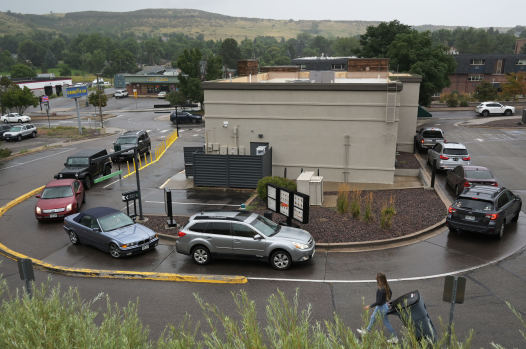
- Drive-thru. Payment processing failures affect 38% of drive-thru employees, and timer errors that mistime or miss cars entirely are reported by 28%. Nearly half of drive-thru employees (49%) rely on workarounds like hand-writing orders or manually pulling cars forward at least once a week. These are not edge-case incidents. They are routine.
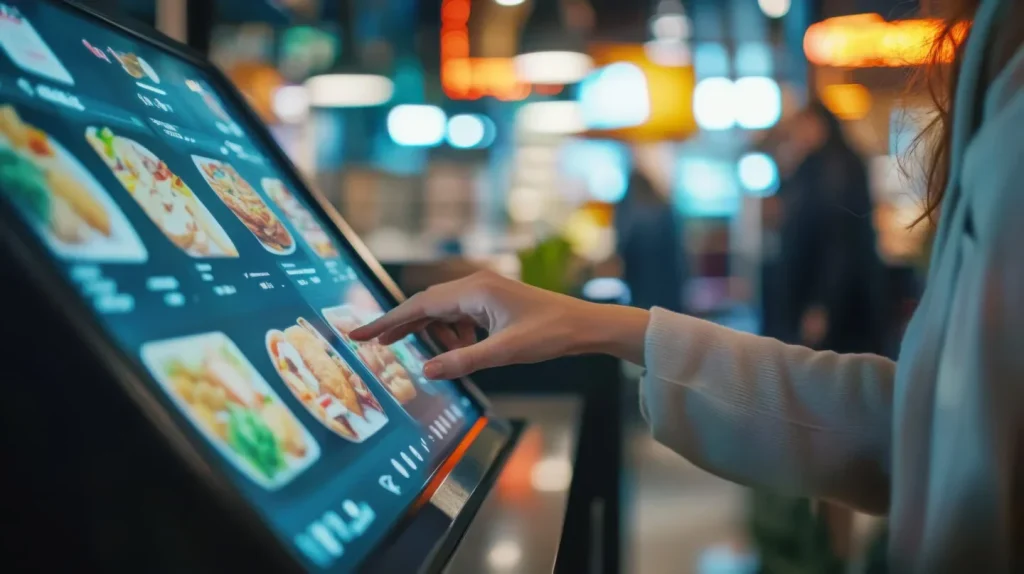
- Self-service kiosks. Kiosks are designed to reduce pressure on staff. When they malfunction, the opposite happens: more than half of QSR employees are pulled away from their primary duties to troubleshoot kiosk issues daily or weekly. The technology intended to create capacity is consuming it.
- Mobile ordering. Nearly one-third of QSR employees experience mobile order problems every week. Mistimed or missing orders are the most common issue, and as the report notes, these problems likely point to deeper backend integration failures, not just surface-level glitches.
The leadership visibility gap
A March 2026 study published in Restaurant Dive surveyed 1,254 restaurant leaders and surfaced something just as troubling as the Canopy data: the people making strategic technology decisions are operating on a fundamentally different picture of operational reality than the people running the stores.
Three specific gaps stood out. First, 63% of C-suite respondents said their systems were fully integrated, but only 32% of director-level respondents agreed. Second, 58% of C-suite leaders said they were extremely satisfied with their system’s ability to share data, compared to just 39% of directors. Third, 56% of C-suite respondents believed their organization had made significant progress on Ai and machine learning adoption, while only 35% of directors agreed.
These are not minor discrepancies in perception. These are structural blind spots. When integration looks complete from headquarters but feels broken in stores, the result is longer ticket times, manual reconciliations, and inconsistent reporting that makes it harder to scale. The C-suite is solving the wrong problems because they’re not seeing the right data.
The c-store parallel
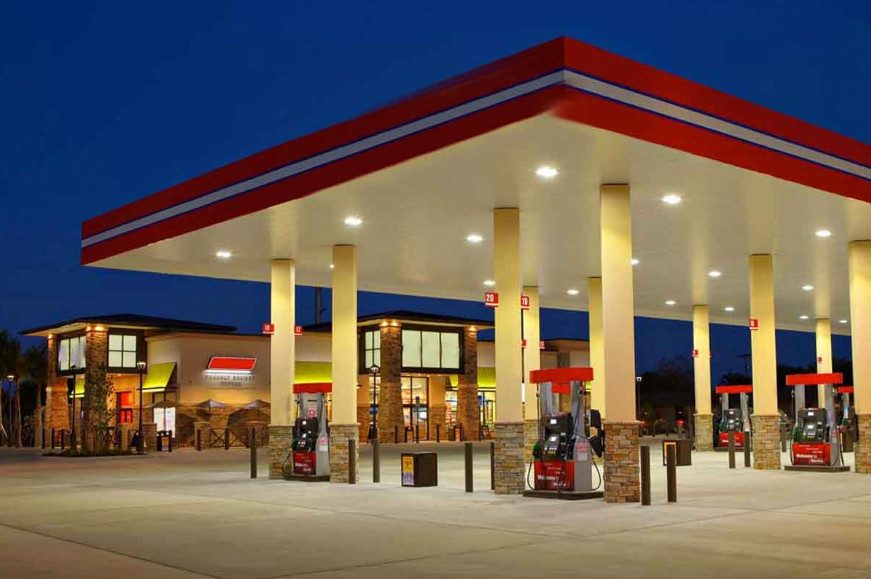
This is not exclusively a QSR challenge. Convenience and fuel retailers operate with comparable technology stacks: POS integrations, digital signage, pump and carwash loyalty platforms, forecourt systems, and back-office reporting. When those systems don’t talk to each other, operators lose the ability to act on what is actually happening at the location level. The same structural gaps that create drive-thru failure cascades in QSRs produce fuel-side and in-store breakdowns in the c-store environment. The problem is the same. Only the layout differs.
What real visibility looks like
The answer is not more technology. It is connected technology with an unbroken line of sight from the transaction to the decision-maker.
i3 International’s platform is designed for exactly these fast-paced, customer-driven environments. By integrating Ai-powered video with POS data through Exception Based Reporting (Smart-ER), multi-site operators can correlate what is happening on camera with what is happening at the register, in real time. A voided transaction, an unexplained refund, a drive-thru lane backing up during a peak window: these become visible, searchable, and actionable rather than noise buried in an end-of-day report.
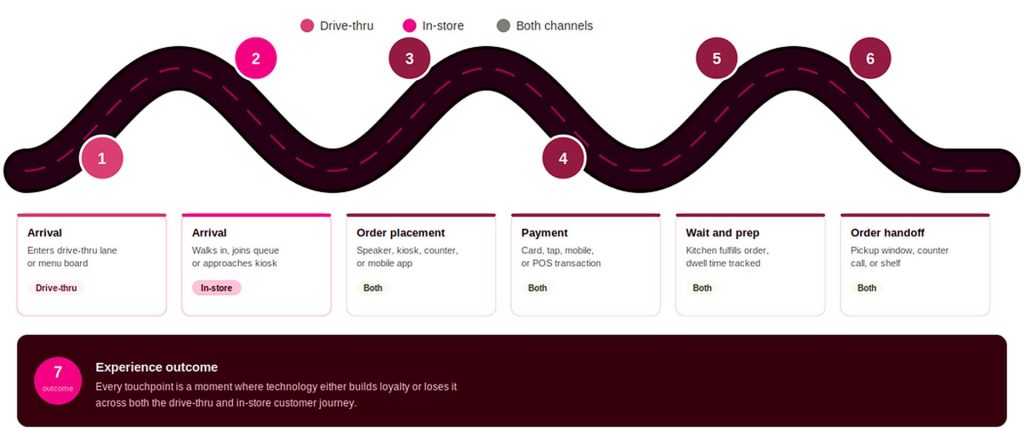
But visibility into exceptions is only part of the picture. Consider the full customer journey, in a QSR environment, or a fuel-plus gas station that has restaurant-go-to destinations. A car pulls into the drive-thru lane. A guest walks through the front door. From that moment forward, every stage of their experience, how long they wait in line, how quickly their order is taken, how accurately it is fulfilled, and how fast it reaches their hands, is either building loyalty or eroding it. Most operators have no objective view of where that journey breaks down. They hear about it after the fact, through complaints, refunds, or a dip in return visits.
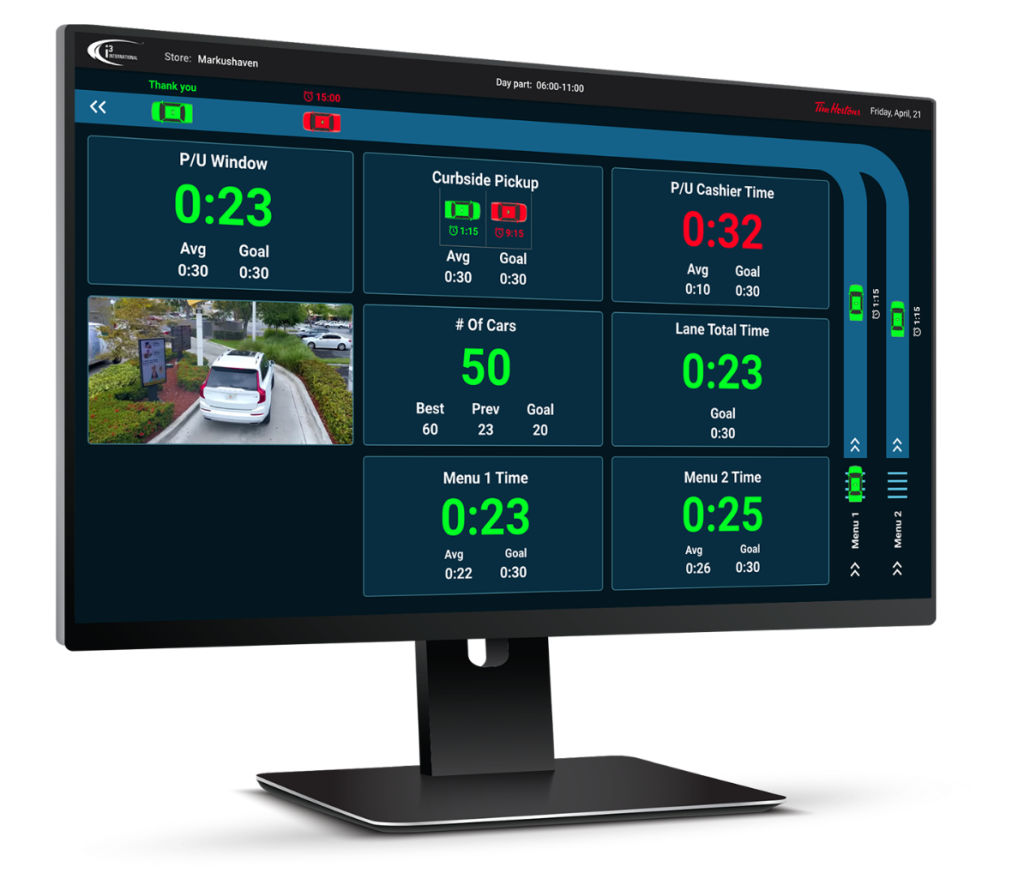
The Velocity Drive-Thru Timer gives operators real-time visibility into drive-thru service speed and throughput across every location, surfacing slowdowns and bottlenecks as they happen rather than hours later. And for the full in-store journey, i3’s In-Store Speed of Service solution tracks every stage from entry to exit, whether that journey begins at a kiosk, a counter, or a drive-thru window. Ai-driven tracking measures line-up, ordering, and handoff stages with precision, and links that data directly to POS transactions. When a location is underperforming, leaders do not have to guess whether the bottleneck is at the ordering stage, the payment step, or the pickup window. They can see it, quantify it, and act on it with data rather than instinct.
This matters because slow service is rarely just a staffing problem. It is often a systems problem in disguise. A POS integration that adds friction at the register, a kiosk that routes orders inconsistently, a drive-thru timer that misses cars during a rush: these show up as abandoned orders and frustrated customers long before they appear in a corporate report. Connected operational intelligence surfaces them early, giving leadership and store teams the same objective picture to work from, and finally closing the gap between what executives believe is happening and what customers are actually experiencing.
The question every QSR leader should be asking
The Restaurant Dive study found that only 27% of respondents cited leadership resistance to change as a barrier. In other words, the appetite to modernize is broadly there. But appetite alone is not closing the gap. C-suite leaders are rating their integration health at nearly double the rate their directors are. Ai adoption is seen as a success story at the top and an undelivered promise at the store level. The problem is not willingness to change. It is the absence of an accurate, shared picture of what actually needs changing.
That is a visibility problem, not a strategy problem.
Integrated Ai video and operational intelligence give every level of your organization the same ground truth. What is happening at the register, in the drive-thru lane, on the floor: all of it connected, all of it visible, and all of it actionable before it becomes a pattern that shows up in your revenue instead of your reports. That alignment is not a competitive advantage. At this point, it is the baseline requirement for sustainable, long-term running operations.
Schedule a call with i3 to see how integrated visibility works across your locations.