Takeaways from The NGA Show 2026 — and what they mean for every independent grocer, c-store, QSR, and regional retail operator watching the Ai conversation from the sidelines.
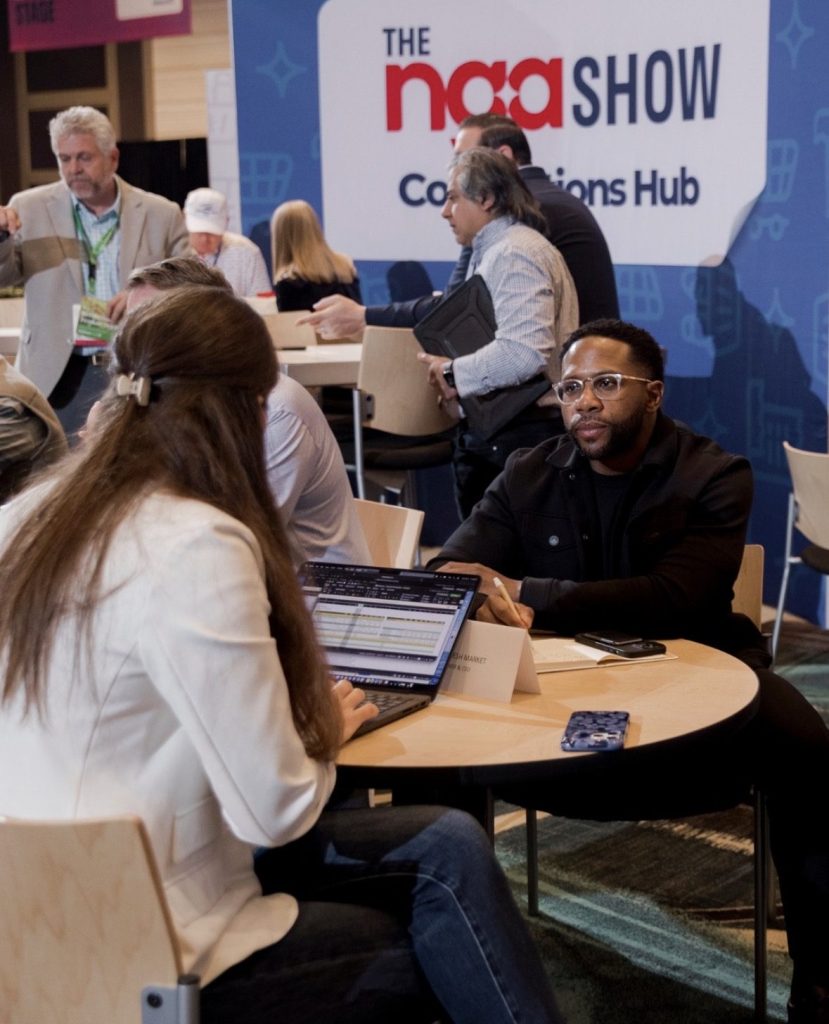
Standing on stage at The NGA Show in Las Vegas this February, Wakefern Food Corp. president Mike Stigers cut through years of industry anxiety with a single line: “This isn’t something that the big guys have that we don’t. This is something we all have.”
He was talking about Ai. And he was talking to a room full of independent grocers who’d spent the last two years watching Walmart, Amazon, and Kroger pour billions into cutting-edge tech; and wondering whether their stores were about to be left behind.
The answer, according to Stigers and other speakers across the NGA Show floor, was a firm no. Not because Ai isn’t reshaping retail, it absolutely is. But because for the first time in a generation, a genuinely transformative technology is showing up, and its inclusive to all-size retailers.
If you run an independent grocery store, a regional c-store chain, a thrift operation, a multi-unit QSR franchise, or a specialty retail banner, this is your moment. Here’s why, and how to act on it without betting the business.
The wake-up call, and why it’s actually good news
The NGA Show had a clear message for anyone still on the fence. Smaller retailers shouldn’t assume that the community ties and other traditional strengths that have long helped them draw in shoppers will sustain them at a time when artificial intelligence and robotics are quickly rewriting the rules of commerce.
Amy McClellan, chief commercial officer of SpartanNash, put an even finer point on it: “As you’re thinking about technology and the evolution of how shoppers interact with technology, don’t make [the] mistake of saying, ‘Not my shopper, never in my community.'”
That’s the wake-up call. But here’s the part the headlines keep missing: the solution is more accessible than ever. Stigers’ own framing was almost disarmingly practical. “AI is an enabler and a tool for us to just take our knowledge, our data, our information that’s already out there and help process it.”
Artificial Intelligence is a tool that helps you make sense of what you already have: the cameras already on your ceiling, the POS data already flowing through your registers, the access events already logged at your doors.
The nimble advantage small retailers have
Big chains carry big advantages: capital budgets, corporate R&D, armies of analysts. But they also carry something small retailers don’t: decades of legacy technology, multiple acquired platforms, and the bureaucracy to match. Rolling out a new Ai capability across 4,000 locations can take a national chain years.
A small retailer, one store, ten stores, fifty stores, can pilot something this quarter and expand it next. You’re closer to your customers, closer to your front-line staff, and quicker to decide. That’s not a disadvantage. That’s a moat.
Kristin Popp, EVP of Midwestern chain Woodman’s Food Markets, added another practical angle at the same NGA keynote: tap your younger staff members to lead Ai adoption, because this is what they already know and use. Give them the opportunity to teach you what’s happening and how to use it to be more productive. You probably already have the people. You just need to give them permission to build.
Affordable and practical
For years, Ai-powered video conjured images of enterprise data centers and six-figure integrations. That hasn’t been true for a while, and it’s certainly not true today.
Modern Ai video surveillance (the kind i3 International has spent more than 35 years building) is designed to scale from a single location to an enterprise rollout without changing platforms. That matters for a small retailer for a very specific reason: you don’t have to commit to “big-guy” infrastructure just to get “big-guy” outcomes. You start where you are, you focus on solving the most poignant problems first, and you grow when the business case is proven, not before.
Here’s what that actually looks like:
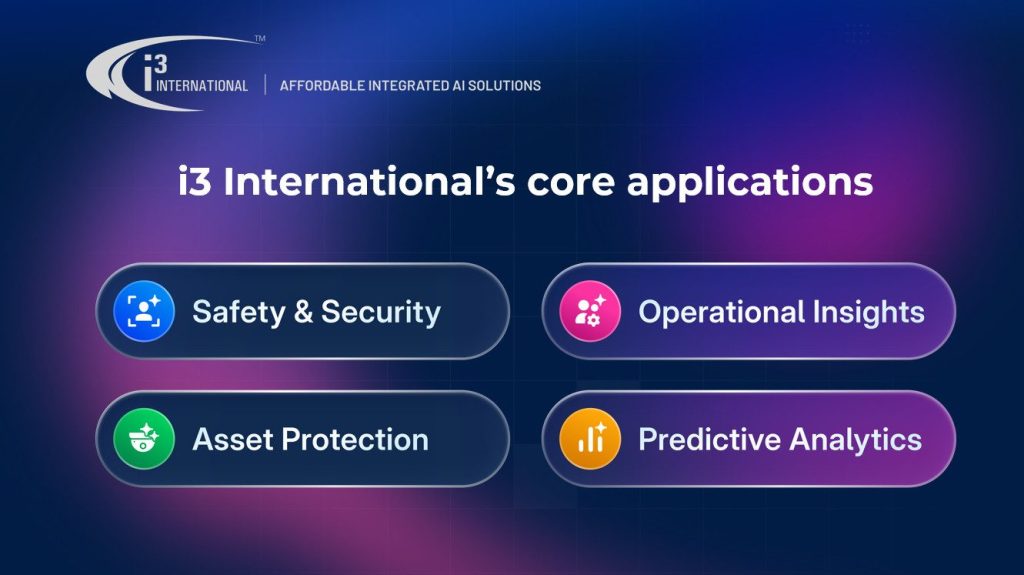
For loss prevention and asset protection. Exception-Based Reporting (i3 Ai Smart-ER) ties POS data directly to video, so suspicious transactions surface automatically instead of requiring hours of manual review. Trajectory Anomaly flags unusual customer paths (such as cart pushouts) the moment they happen, not days later when you’re reconciling shrink numbers. License Plate Recognition (LPR) turns your parking lot into an early-warning system for repeat offenders.
For safety and risk management. Facial Matching with i3 Ai Sentry supports watch-list alerting so your team knows before a situation escalates, not after. Slip, Trip, and Fall detection flags incidents in real time, which is a game-changer for liability. i3 Ai Obstruction Detection keeps emergency exits clear. i3 Ai Loitering Detection notices when someone has been lingering in a sensitive area longer than they should.
For operations and customer experience. People Counting and Employee Engagement show you how many customers are in store, how long employees are engaging with customers, and if conversions happened. Velocity Drive-Thru Timer helps QSR and coffee operators cut seconds out of service.
None of this requires a team of data scientists. It runs on cameras and a unified platform. And because i3 connects Ai, POS, and access data in one place, you’re not stitching together five vendors to get a single picture of what’s happening in your store.
Ai protects what small retailers do best
Here’s something easy to miss in all the Ai coverage. Stigers made a point of noting that Wakefern’s Ai team doesn’t sit inside IT. It reports to the Chief Sales Officer, because Wakefern is a selling and people organization, one that needs to take care of its communities and teammates in order to sell more groceries.
The point of Ai, for a retailer, isn’t the Ai itself. It’s what the Ai gives back: time, attention, and energy that can go to customers and teammates instead of back-office busywork. “Ai just allows you to be more personable with your teammates, to be more personable with the communities you serve, because you have time to do it instead of sitting doing routine rote work.”
That framing matters, because it flips the conversation. Ai isn’t a threat to the human, service-first culture that small retailers have always competed on. Used well, it’s the thing that protects that culture by giving your people back their time, and results on your investments. It also provides gap coverage for areas that need more visibility, or insights on data where correlations were missing.
You already have what the big guys have
The technology is here. It’s proven: the same i3 platform that powers independent operators also runs in Kroger, Whole Foods, Goodwill, Burger King, Tim Hortons, Wendy’s, Popeyes, Five Below, and hundreds of regional chains. It scales down to one site and up to thousands. It integrates with what you already run. And it starts with the problems you already know you have: shrink, safety, service, and operational efficiency.
The only thing separating a small retailer from the “big guys” when it comes to Ai implementation is the decision to start.
Stigers was right. This isn’t something only the big guys have. This is something everyone can achieve.
Sources: Silverstein, S. “Wakefern chief urges independent retailers to ‘not be afraid’ of AI.” Grocery Dive, Feb. 3, 2026. Silverstein, S. “Independent grocers need to embrace tech to stay competitive, experts say.” Grocery Dive, Feb. 2, 2026.
Ready to see what AI-powered video looks like in your store? Contact us, our team will walk you through exactly what’s possible for your business size, your vertical, and your overall goals.